
Stuart Lessels
Enrich Mortgage Group Ltd.-Ontario
Contact Info:
About
Awards and Certifications:

Certified Equifax Credit Professional
Explore Our Services
Preview Our Rates
Access all your mortgage options with just one application. Preview today's rates first:


Blog
Prepared Homes, Prepared People: A New Year Reminder About Emergency Readiness
January 26, 2026
Prepared Homes, Prepared People: A New Year Reminder About Emergency Readiness
The start of a new year is when many of us reset.
- We make plans.
- We set goals.
- We organize what matters.
It’s also the perfect time to think about something most people only consider after it’s too late: emergency preparedness.
- Not in a dramatic way.
- Not in a fear-based way.
Just calmly and realistically.
Because emergencies don’t wait for the “right” moment.
A Reminder from Close to Home
Not long ago, our community was reminded of this reality.
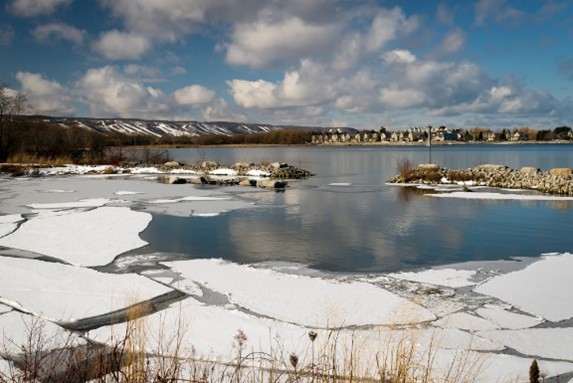
Following the failure of an underground watermain — the kind of infrastructure issue that can happen in any town, at any time — parts of Collingwood experienced a boil water advisory.
For some households, it was inconvenient.
For others, especially families with children, seniors, or medical needs, it was stressful.
And moments like that reveal something important:
- Preparedness isn’t about panic.
- It’s about reducing stress when the unexpected happens.
A Quiet Thank-You Worth Repeating
During that advisory, one quiet act of community support stood out.
Ice River Springs — a Canadian bottled water company based in Shelburne, Ontario — stepped up and donated bottled water to help residents during the advisory. Friday night around 5pm the advisory was issued, Saturday morning they brought a truck full of bottled water, donated to the community for those who needed it
- There was no splashy promotion.
- No marketing campaign.
- hey simply helped.
The Town of Collingwood publicly thanked them at the time, and that gesture is still worth acknowledging — especially as we head into a new year focused on preparation and resilience.
Now, to be clear: this isn’t about promoting bottled water as an everyday choice. Collingwood’s tap water is typically excellent, and strong public infrastructure matters.
But emergencies are different.
And when a Canadian company quietly supports a community in a moment of need, it deserves recognition.
Why This Still Matters Now
You might be thinking: That was last month — why talk about it now?
Because the lesson is evergreen.
Emergencies don’t follow calendars.
They show up as:
- Power outages during cold snaps
- Water issues from aging infrastructure
- Ice storms
- Furnace failures in January
- Flooded basements in spring
None of these are rare anymore.
Yet many households still start the year without:
- A basic emergency preparedness kit
- A backup plan for heat or power
- Easy access to important documents
- A financial plan for unexpected costs
Preparedness isn’t pessimism.
It’s responsibility.
What a Real Emergency Preparedness Kit Looks Like
A good emergency kit doesn’t have to be overwhelming. It just needs to be thought through.
1️⃣ Water & Food
- Drinking water for at least 72 hours
- Non-perishable food
- Manual can opener
- Bottled water for times when tap water isn’t usable
This is where community support — like what Ice River Springs provided — becomes critical.
2️⃣ Heat, Light & Power
- Flashlights
- Extra batteries
- Candles with proper holders
- A backup heat plan
- Portable phone chargers or power banks
Winter emergencies don’t wait for repairs.
3️⃣ Health & Medications
- Prescription medications
- Basic first-aid supplies
- Copies of medical information
- Special considerations for children or seniors
Health needs don’t pause when systems go down.
4️⃣ Documents & Communication
- Copies of ID
- Backups of your pictures and documents, stored outside of your home (like another house, a safety deposit box, etc)
- Insurance policies
- Emergency contact lists
- A simple family communication plan
Preparation here prevents chaos later.
The Part Most Kits Miss: Financial Preparedness
This is the piece almost everyone overlooks — and often regrets.
Emergencies cost money.
Not because someone made a mistake, but because:
- Repairs don’t wait
- Insurance deductibles still apply
- Temporary accommodations cost real dollars
- Missed work affects cash flow
A financial preparedness plan is just as important as water and batteries.
That means:
- An emergency fund
- Access to affordable credit before you need it
- Knowing your insurance deductibles
- Understanding your options calmly — not under pressure
Here’s the truth most homeowners only learn the hard way:
- You don’t arrange financing during an emergency.
- You arrange it before one happens.
The same way you don’t build an emergency kit in the middle of a crisis.
Why This Matters for Homeowners in 2026
Homeownership is about more than rates and payments.
It’s about resilience.
Prepared homeowners:
- Recover faster
- Avoid rushed decisions
- Reduce stress on their families
- Protect long-term financial stability
Financial preparedness might look like:
- A HELOC set up but unused
- Understanding refinance options
- Knowing where your equity sits
- Reviewing insurance alongside financing
Not because something will happen — but because if it does, you’re ready.
That’s not alarmist.
That’s smart ownership.
Community Resilience Starts at Home
What stood out most during the advisory wasn’t the inconvenience — it was the response.
- Municipal teams worked through repairs.
- Distribution centres were organized.
- A Canadian company stepped up quietly.
- Neighbours checked in on neighbours.
That’s community resilience.
And it’s exactly the mindset worth carrying into a new year.
Final Thought
As we move into 2026, consider this a calm reminder — not a warning.
Thank you again to Ice River Springs for stepping up when help was needed.
And for everyone else: preparedness isn’t about fear. It’s about peace of mind.
Because when something unexpected happens, the plan you made before matters most.
Stuart....
2026 Mortgage Forecast: Calm, Cautious, and All About Strategy
January 10, 2026
As we wrapped up another year, I want to start by saying this:
I hope you had a wonderful Holiday — and welcome to 2026. 🎉
If the last few years taught us anything, it’s that mortgages are no longer a “set it and forget it” decision.
And that’s exactly why this year matters.
Where We’re Starting 2026 From
In December 2025, the Bank of Canada held its policy rate steady again — and more importantly, explained why.
Three themes stood out:
- Inflation is cooling, but not evenly
- Economic growth is slowing, not collapsing
- Past rate hikes are still working through the system
Translation?👉 The heavy lifting is done.👉 Now it’s about watching, waiting, and managing risk.
The 2026 Interest Rate Outlook (Plain English)
Here’s the honest forecast most banks won’t put in an ad:
❌ No rapid rate cuts
❌ No surprise spikes
✅ A range-bound year
Most economists expect:
- A stable overnight rate for much of 2026
- Possible modest cuts later in the year if inflation continues easing
- Fixed rates to move before the headlines, not after
That means waiting for the “perfect” rate could cost you more than acting early.
What This Means If You’re Renewing in 2026
This is the big one.
If you locked in a rate under 2% years ago, Congratulations…and yes, 2026 is your reality check — but it’s not a disaster if handled properly.
Smart renewal strategy in 2026 looks like:
- Reviewing term length, not just rate
- Considering blended or staggered renewals
- Protecting cash flow, not gambling on cuts
- Using equity strategically, not emotionally
👉 The biggest mistake? Letting your lender auto-renew you.
Buyers: Timing Matters Less Than Structure
Waiting for rates to drop before buying rarely works.
Why?
- Prices move faster than rates
- Qualification rules don’t loosen overnight
- Competition returns before affordability headlines
In 2026, the buyers who win are the ones who:
- Get approved early
- Understand stress-test math
- Lock flexibility into their mortgage
Investors: Debt Structure Is the Real Risk
2026 separates casual investors from strategic ones.
The question isn’t:
“Will rates drop?”
It’s:
“Is my portfolio structured to survive if they don’t?”
Key focuses:
- Cash-flow buffers
- Fixed vs variable mix
- Access to equity without forced sales
The Real Opportunity in 2026
This is a planning year, not a panic year.
The clients who do best in 2026 will:
- Review early
- Ask better questions
- Stop chasing headlines
And that’s where good advice still matters.
Final Thought
Rates don’t crash markets.
Bad planning does.
If you’re renewing, buying, investing, or just want clarity — now is the time to talk strategy, not speculation.
Stuart Lessels
Your “Go To” Mortgage Broker for Georgian Bay and beyond
📞 (705) 445-1234
Bank of Canada Holds at 2.25% — What This Means for Mortgages, Renewals, and 2026 Strategies
December 11, 2025
Bank of Canada Holds at 2.25% — What This Means for Mortgages, Renewals, and 2026 Strategies
If you were hoping the Bank of Canada would roll into December like Santa and drop interest rates early… well, not this time.
But don’t worry — this announcement is still very good news for homeowners, buyers, investors, and anyone staring down a renewal in 2026.
Let’s break it down in plain Canadian English, with a dash of cheekiness and whole lot of “here’s what actually matters.”
🎅 Today’s Headline: The Bank of Canada Holds the Policy Rate at 2.25%
At exactly 10 a.m. (or 9:45 if they hit “publish” early — classic BoC), the Bank said:
We’re staying put.
The overnight rate remains at 2.25%, with the Bank Rate at 2.5%.
And the reason is surprisingly simple:
**Inflation is behaving.
The economy is wobbling but not falling.
And Canada is going through a massive “structural adjustment.”**
That last one — structural adjustment — sounds like something you'd hear in a chiropractic clinic, but trust me, it matters.
Let’s break down what the Bank actually said… and what it means for real Canadians with real mortgages.
🌎 1. The Global Economy Is Weird — But Stable Enough
The BoC pointed out that:
·The U.S. is basically running on AI-fuelled spending
·Europe is doing better than expected
·China is slowing down (again)
·Trade tensions are still a thing
·Oil, CAD, and global financial conditions are unchanged
In short:The world isn’t falling apart, but it’s definitely not winning any “Most Stable Economy” awards either.
🍁 2. Canada’s GDP Looks Strong… But Don’t Be Fooled
We grew 2.6% in Q3, which sounds fabulous until you read the fine print:
·Most of that growth came from trade volatility
·Final domestic demand was flat
·Q4 GDP will likely be weak
Translation:The headline number looks better than what’s actually happening on the ground.
Consumers are cautious.
Businesses are cautious.
Housing is stabilizing but still tight.
And lenders? They’re basically saying: “Show me the income, show me the stability, and we’ll talk.”
🧑🏭 3. Labour Market Showing “Some” Improvement
Unemployment dipped to 6.5%, and we’ve added jobs… but mostly outside sectors tied to international trade.
This means:
·The job market isn’t tanking
·But it’s not running hot enough to push inflation up
·Wage growth isn’t spiralling (a very big deal)
This is exactly the mix the Bank wants to see before cutting rates in 2026.
🔥 4. Inflation: Quietly Returning to Normal
This is the best news in the whole report.
·Total CPI = 2.2%
·Inflation has been near 2% for over a year
·Core inflation = 2.5–3%
·Underlying inflation = about 2.5%
These numbers mean something extremely important:
The Bank of Canada thinks they're finally in the “right zone.”
They even said it plainly:
“If the economy evolves as expected, the current rate is about the right level to keep inflation at 2%.”
That is as close as they get to saying:
“Hold tight — rate cuts are coming… just not yet.”
🧨 5. So Why No Rate Cut Today?
Two reasons:
Reason #1 — GST/HST base effects
A temporary bump in prices is coming because last year’s tax holiday created artificially low prices.
Reason #2 — Structural Trade Adjustment
Canada is in the middle of a global supply chain rearrangement, shifting away from old trade patterns.
This creates:
·Higher costs
·Slower growth
·More volatility
·Pressure on manufacturing and exports
The Bank wants to keep interest rates stable while this unfolds.
🎯 OK, Stuart — What Does This Mean for Mortgages?
Glad you asked. Here’s the clear, honest breakdown:
🧩 1. Fixed Mortgage Rates Likely to Stay Near Current Levels
Fixed rates follow the bond market, not the Bank of Canada.
Bond yields are stable and trending slightly downward.
Expect fixed rates to remain steady into early 2026.
Upside?Rate cuts next year will make bonds cheaper.
That means fixed mortgages will follow.
🧩 2. Variable Mortgage Rates Will Change Only When the BoC Moves
Since the Bank held today:
·Prime stays where it is
·Variable-rate mortgage payments remain unchanged
·HELOC interest remains unchanged
But…
The Bank is setting the table for 2026 cuts.
They won’t say it directly, but that’s the reality.
🧩 3. Renewals in 2026–2027: This Announcement Is Very Good News
If you're renewing in the next 18–24 months, this is what you need to know:
·Inflation has stabilized
·Rates are not rising
·The next move will likely be down
·Lenders are already sharpening pencils for early renewals
This is your moment to prepare — and maybe save thousands.
🧩 4. Investors: “Flat Market” Means Opportunity
When the economy is soft but stable:
·Sellers get realistic
·Buyers get picky
·Rents stay strong
·Lenders compete harder for solid files
If you’re waiting for a sign… This is it.
🧩 5. Homebuyers: Don’t Wait for the “Perfect” Moment
Rates may tick down in 2026, but prices will react — quickly.
Getting pre-approved now (and locking a rate) is a strategic play.
🧩 6. HELOCs: Get Them Before You Retire
A HELOC is based on income, not equity.
If you’re planning to retire in 2026 or 2027, today’s announcement means:
·Stability
·Predictable payments
·A window of opportunity
Don’t wait until you’re on fixed income to apply.
🎁 So What Should You Do Now?
Here’s your simple mortgage survival checklist:
·Check your renewal date
·Review your equity
·Consider a HELOC while income is strong
·Get pre-approved early
·Investors: start scouting now
·Homeowners: lock in rates when favourable
·And yes — ask me to run the numbers. That’s literally what I do.
💬 Final Thought
This wasn’t a flashy announcement — but it was an important one.
The Bank of Canada just confirmed:
✔ Inflation is under control
✔ The rate is at the “right” level
✔ No hikes are coming
✔ Cuts will follow stability
✔ 2026 is shaping up to be a better year for borrowers
And if you want to be ready — I’ve got your back.
Stuart...
The 493-Page Budget You’ll Never Read — and Why I Did
November 15, 2025
Canada’s 2025 Federal Budget is 493 pages long. Ontario’s Fall Economic Statement adds another 220. That’s over 700 pages of government talk — and I actually read them.
Why? Because buried in all that fine print are the clues to what will happen to your mortgage, your renewal, and your buying power in 2026.
Most of the headlines focus on “record deficits.” But the real story is how those decisions shape the money you borrow and the home you live in.
1️⃣ The $78-Billion Deficit — and Why It Matters
Ottawa is spending big again — a $78-billion deficit (Budget 2025, p. 38).
That means the federal government will borrow a lot more money.
Here’s why you should care:
- When Ottawa borrows, it issues Government of Canada bonds.
- More bonds = more supply = higher bond yields.
- And bond yields are what your fixed mortgage rate is built on.
So even though inflation is cooling, the deficit keeps rates from dropping quickly.
Think of it like this: Ottawa borrows first — and we all pay the interest later.
2️⃣ Ottawa’s Forecast — Slow and Steady
In Annex 1 (Budget p. 412), the government expects five-year bond yields to average 3.3 % in 2026, just below 2025’s 3.5 %.
That points to five-year fixed mortgage rates around 4.8–5.1 %.
Translation: no crash, no spike — just stability.
And that’s actually a good thing.
It gives you time to plan, not panic.
3️⃣ The Bank of Canada and the U.S. Fed — The Slow Dance
- Bank of Canada rate: 2.25 %, on hold.
- U.S. Fed rate: 4.75 %, also holding.
Canada can’t cut rates too fast or the dollar could fall.
So, the most likely path? Small cuts in mid-to-late 2026.
Good news: no wild swings.
Bad news: no quick drop to pre-pandemic rates.
This is a time for smart planning, not wishful thinking.
4️⃣ Ontario’s Economic Update — A Real-World View
The 2025 Ontario Fall Economic Statement (A Plan to Protect Ontario) shows the province slowing but stable:
- GDP growth: 0.8 % (2025) → 0.9 % (2026)
- Deficit: $13.5 B (2025–26)
- Debt-to-GDP: stable
- 8 % HST removed for first-time buyers of new homes under $1 M
- Municipal Housing Infrastructure Fund: now $4 B
- Infrastructure plan: $201 B over 10 years
Ontario’s economy isn’t booming — but it’s holding up.
Jobs remain solid, people keep moving here, and housing demand stays healthy.
5️⃣ Housing and Affordability — Governments Still Spending
The Federal National Housing Accelerator Fund got a $7 B boost. Ontario added $4 B to help towns build faster. Plus, the new HST rebate saves first-time buyers up to $80 000.
That means the housing market will stay active, not collapse.
More support equals more confidence.
6️⃣ Your 2026 Mortgage Game Plan
Situation | What’s Happening | Smart Move |
🔁 Renewing in 2026 | Rates steady ≈ 4.8–5.1 % | Shop early (120 days out). Consider a 3-year fixed or hybrid. |
💰 Refinancing | Lenders competing as bond yields stabilize | Consolidate debt before spring 2026. |
🏠 Buying | Prices flat, rebates growing | Lock your pre-approval and use rebates now. |
🏘 Investors | Strong rent demand, steady rates | Plan long-term, stress-test at 5 %. |
7️⃣ Quick Forecast Snapshot
- 5-year bond yield ≈ 3.3 % (2026)
- Variable rates down 0.25–0.5 % by late 2026
- Ontario GDP +0.9 % (2026 projected)
- Housing starts +2–3 % (under population growth)
Bottom line → Gradual relief and balanced markets.
8️⃣ Three Smart Moves Right Now
- Check your renewal date. You can lock 120 days out.
- Run two rate scenarios. Flat vs -0.25 % — see the impact.
- Stay flexible. Shorter terms or blend-to-extend options keep you nimble.
9️⃣ The Takeaway
Two budgets. 700 pages. One message: stability is your friend.
Plan ahead while others wait for a miracle rate drop.
This is your window to get ahead of 2026.
📞 Let’s chat about how these numbers fit your mortgage plan.
Stuart....
Stuart Lessels
Your “Go To” Mortgage Broker for Georgian Bay and Beyond
📧 stuart@housenow.ca 📞 (705) 445-1234
FSRA #12487 | Mortgage Alliance — Enrich Mortgage Group Ontario

Stay Connected
Subscribe to our Newsletter and you'll stay up to date on rates that help you save thousands in interest.